By Arvian Hesketh
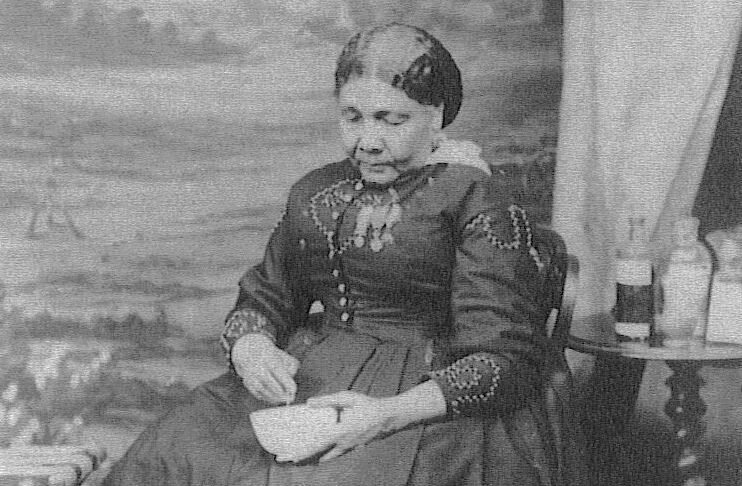
In the autumn of 1854, Mary Seacole, a nurse of Scottish and Jamaican Creole descent, travelled to London to petition for inclusion in Florence Nightingale’s contingent of nurses who were to be sent to the Crimean Peninsula to treat casualties of the Crimean war. Despite her extensive nursing experience treating cholera in Panama (Seacole 27) and Jamaica, Seacole was informed that there was no vacancy for her, possibly based on her race. Undeterred by this rejection, Seacole booked transit to Crimea where she established the “British Hotel” in Kadiko, an outpost near Balaclava, which acted as a clinic and hotel offering access to a range of necessities for British soldiers. Upon returning to London destitute and in ill health, she published her memoir, Wonderful Adventures of Mrs Seacole in Many Lands (1857), to recuperate her financial losses. As a female traveller, Seacole transgresses the socially constructed image of the archetypal role as a wife and mother which would have confined her to the home. One of Seacole’s key strategies of self-representation was her deployment of a maternal rhetoric to justify both her travels and her unmarried status and authenticate her identity. During her account of the Crimean conflict, Seacole takes on the role of a surrogate mother to the English soldiers under her charge, becoming known as “Mother Seacole” or simply “mother” (84, 127) among the English troops. Through this maternal framing, Seacole extends racial boundaries, by metaphorically extending her own family line through intimate, non-biological bonds, creating a more expansive inner circle which accommodates her ethnic alterity. Scholars such as Simon Gikandi suggest “that it is only within the dominant codes of Victorian England that she can inscribe herself as a subject” (131), adding that “she writes a narrative in which her own unique status as a colonial subject depends on a certain valorization of the colonial mission, its cultural project and its hegemonic aspirations” (142). However, this reading overlooks the wider gendered expectations of the Victorian era and the attendant intersections of maternal duty with imperial expansion. Seacole’s use of such maternal nicknames poses significant questions about the received definitions of Britishness during the mid-Victorian era. By styling herself as the “motherly yellow woman” (78) of English troops, Seacole subtly separates whiteness from the inner circle of Britishness, assuming a British subject position, whilst simultaneously acknowledging her mixed parentage. By exploring how Seacole mediates her Anglo-Caribbean identity through this maternal framework, this article illustrates how she expands Victorian sex and gender to craft a British identity which is at once diverse and flexible.
Among many Victorian thinkers, men and women’s duties were defined by separate spheres. In his seminal tract, “Of Queen’s Gardens” (1865), John Ruskin argues that “the woman’s power is for rule, not for battle, . . . her intellect is not for invention or creation, but for sweet ordering, arrangement, and decision” (147). Though Ruskin avoids claims of “superiority” (146) between the sexes, his idea of a productive household is underwritten by two separate spheres: “she is protected from all danger and temptation. The man, in his rough work in the open world, must encounter all peril and trial” (147). Within this dichotomy, Ruskin codifies the public sphere as distinctly masculine and the private as a feminine space. This idea was similarly conveyed in the genre of conduct literature which helped to define prevailing ideas of female respectability in the Victorian period, entrenching various household duties and moral values for women to follow. Texts such as Sarah Lewis’s Woman’s Mission (1839) and Louis Aimé-Martin The Education of Mothers of Families (1834) conceive maternal ideals with broader sociopolitical importance, with Aimé-Martin proclaiming that “the maternal bosom of the mind of nations reposes; their manners, prejudices, and virtues — . . . the civilization of the human race all depend upon maternal influence” (19). Whilst a woman’s place was effectively housebound, the female sphere intersects with national and ideological expansion. As a traveller and nurse, Seacole concurrently draws upon whilst subtly defying the “Angel in the House” archetype,straddling the boundaries between public and private spheres by engaging in the duties of motherly care, whilst also venturing outside the home and onto the battlefield. Seacole’s use of maternal rhetoric allows to widen the domestic sphere to encompass masculine-coded spaces without defying feminine respectability. By recontextualizing her medical work as an extension of maternal duty, Seacole reconfigures public labour in the “open world” as a form of feminine and national legitimacy.
Seacole strategically assumes a British identity which at once embraces multiple national and racial subject positions, emphasising both her dual parentage and diverse cultural heritage, identifying herself as a “Creole, and hav[ing] good Scotch blood” (1). By invoking a Creole identity, Seacole self-consciously champions an ambiguous cultural and racial position, which variously refers to people “born of European Parents in the West-Indies” (Dampier I. 68) as well as “[a]ny person of mixed ancestry born in a country previously colonized by white Europeans” (OED), thereby allowing a range of self-identifications. When reflecting on common perceptions of Creole subjectivity, she notes that “Many people have also traced to my Scotch blood that energy and activity which are not always found in the Creole race. . . . I have often heard the term ‘lazy Creole’ applied to my country people . . . All my life long I have followed the impulse which led me to be up and doing” (1). It is from her Scottish father where Seacole “trace[s] my affection for a camp-life, and my sympathy with what I have heard my friends call ‘the pomp, pride, and circumstance of glorious war’” (1). Though the Scottish, particularly highland Scots, were themselves regarded as an inferior ethnic group by ethnologists such as Robert Knox (18), Seacole frames her “good Scotch blood” in terms of a broader notion of British imperial might, suggesting that it was “that energy and activity” which neutralises the “indolence” of her maternal bloodline. However, Seacole’s careful use of reporting clauses such as “I have often heard the term,” “what I have heard,” and “Many people have also traced” assign these more negative stereotypes to external voices. This linguistic tactic allows Seacole to operate within a cultural space where such racial imaginings were circulated, concurrently suggesting that she is a departure from such stereotypes, whilst implicitly challenging the image of the ‘lazy creole.’ Yet, whilst Seacole touts her Scottish heritage to establish a genealogical claim to a British subject position, she is not wholly reliant upon this lineage to legitimize her life’s story.
Rather, Seacole invokes her Creole line as the dominant influence on her career, claiming that it was her mother from whom she “inherit[s] her tastes; . . . a yearning for medical knowledge and practice” (2). Another significant female figure from her youth is an unnamed “old lady . . . who could scarcely have shown me more kindness had I been one of them; indeed, I was so spoiled by my kind patroness that but for being frequently with my mother, I might very likely have grown up idle and useless” (2). Seacole’s characterisation of her mother suggests that creole women did not keep their children about the home nor were they solely responsible for their upbringing. Seacole’s description of these maternal figures serves to frame her entrepreneurial ambitions as acceptable maternal conduct within a Caribbean cultural space. Seacole’s use of the comparative clause, “like very many of the Creole women,” characterises public labour as acceptable, even expected behaviour for mixed-race Caribbean women. Indeed, as Verene Shepherd notes, lodging-house keeping was a common occupation amongst mixed-race women with “[s]ome free coloured women earn[ing] money from running small hotels or ‘lodging-houses’” further remarking that “[t]he owners were noted for their skill in herbal medicine and were said to be excellent nurses” (74-5). Effectively, Seacole deliberately seizes upon the ambiguity of her heritage to involve herself in more active endeavours beyond the home. By illustrating that it was both these women who prevented her from falling into “idle and uselessness” (2) and shaped her medical career, Seacole locates the foundation of her profession to her maternal inheritance which is culturally rooted in the Caribbean yet carefully aligned with imperial interests. Seacole assumes a Creole identity whilst divesting its more negative associations, reframing her mixed-race as a mark of motherly care.
Rather than an outright rejection of the entangled ideas of nation, gender and race, Seacole’s autobiography suggests that there is a level of intersectionality between such categories as race, gender and subjectivity. Throughout the text, Seacole avoids affiliating herself with any single racial or national classification, associating herself with a range of subject positions, identifying as a “Creole” as well as linking herself to a British identity, but extending this circle to encompass her ethnic alterity. With her ability to occupy these different inner circles, Seacole evinces the permeability of the boundaries between both gendered boundaries and imperial categories.
Works Cited
Aimé-Martin, Louis. The Education of Mothers of Families; Or, The Civilisation of the Human Race by Women. 1st. London: Whittaker & Company, 1842, 1834. Web. HathiTrust.
Dampier, William. A New Voyage Round the World. Deſcribing Particularly the Iſthmus of America, ſeveral Coaſts and Iſlands in the Weſt Indies, the Iſles of Cape Verd, the Paſſage by Terra del Fuego, the South Sea Coaſts of Chili, Peru, and Mexico; the Iſle of Guam. 1st. Vol. I. London: James Knapton, 1699. Web. HathiTrust.
Gikandi, Simon. Maps of Englishness: Writign Identity in the Culture of Colonialism. 1st . New York: Columbia UP, 1996. Web. Archive.org.
Knox , Robert. The Races of Men: A Fragment. 1st. Philadelphia: Lea & Blanchard, 1850. Web. Archive.org.
Lewis , Sarah. Woman’s Mission. 4th. London: John W. Parker, 1839. Web. Archive.org.
OED. “Creole, n.” 2023. Oxford English Dictionary Online. Web. OED. 16 May 2024.
Patmore, Coventry. The Angel in the House together with The Victories of Love. 1st. London: George Routledge & Sons, 1905, 1854. Web. Archive.org.
Ruskin , John . “Of Queens’ Gardens.” Ruskin, John. Sesame and Lilies. Two Lectures Delivered at Manchester in 1864. 1st. London: Smith, Elder & Co., 1865. 119-96. Web. Archive.org.
Seacole , Mary . Wonderful Adventures of Mrs. Seacole in Many Lands. Ed. W. H. Russel. 1st. Cambridge: CUP, 2014, 1857. Web. Cambridge CORE.
Shepherd, Verene Albertha. Women In Caribbean History: The British Coloniased Territories. 1st. Oxford: James Currey, 1999, 1999. Web. ProQuest.
About the author:
Arvian Hesketh is a final year PhD researcher in English Literature at the University of Exeter. Arvian’s UKRI AHRC SWW DTP-funded project examines how the idea of mixed-race motherhood found fictional form across a range of literary genres throughout the Victorian era. By reading this fiction in conjunction with postcolonial criticism and multiple aspects of feminist theory, he explores the ways in which characters, who are represented as the children of parents from two or more different racial backgrounds, can be understood with regards to debates concerning individual subjectivity, social cohesion and national belonging.
This post is a part of the Inner Circles series.
Other contributions to the series include:
“Inner Circles: Introduction” by Maria Menzel
“Lines that Refuse to Hold: Revisualising Metaphors of Margin and Centre” by Mrunmayee Sathye
“Thicker Than Water: Weaponised Kinship and Postcolonial Memory in Amadoka” by Anna Dziuban