The essays gathered here approach the inner circle as both an affective and a spatial metaphor, one that condenses a set of questions central to postcolonial studies: who belongs, and on what terms? How are the boundaries of the family, the nation, a language or a culture drawn and policed and how can they be contested, transgressed or reimagined?

-
-
At least since Donna Haraway’s Staying with the Trouble, the concept of kinship understood beyond familial ties has gained traction and has been discussed in terms of its productive (ameliorative) and non-reproductive (communal) forms. Yet it may also be traced in the legitimisation of imperial domination. My attempt to challenge this recent approach does not have to entail negating the necessity of strong bonds within or beyond flesh and blood. Rather, I want to scrutinise examples of kinship mobilised for legitimisation of hierarchy and proclamation of exclusive epistemic positions regarding the objects of kinship.
-
While migration has always been at the very heart of human civilisation, the last century has seen a noticeable shift in the way we understand its realities and imagine the very shape of our world. In recent decades, the phenomenon of postcolonial migration has offered itself up to productive theorisations, to a restructuring of dyadic understandings of colonial centre and colonised periphery, in symbolic as well as physical terms. The migrant experience, or rather, the diasporic experience, has often been perceived as emerging from a single movement in time and space—a single crossing—sealed by the moment of arrival. Regardless of…
-
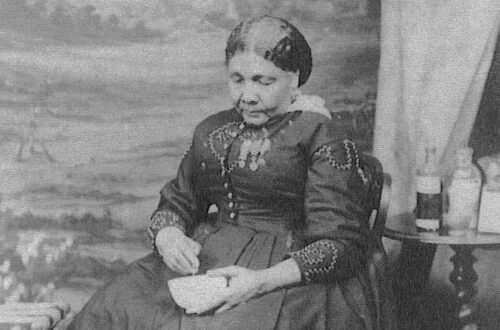
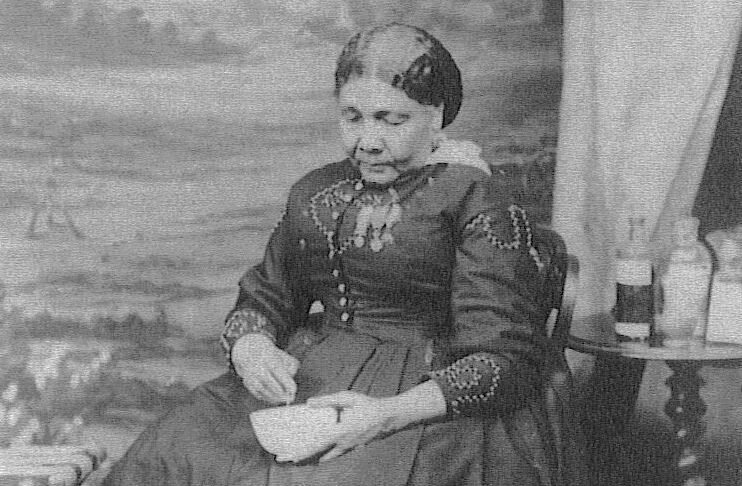
During her account of the Crimean conflict, Seacole takes on the role of a surrogate mother to the English soldiers under her charge, becoming known as “Mother Seacole” or simply “mother” (84, 127) among the English troops. Through this maternal framing, Seacole extends racial boundaries, by metaphorically extending her own family line through intimate, non-biological bonds, creating a more expansive inner circle which accommodates her ethnic alterity.