By Maria Menzel
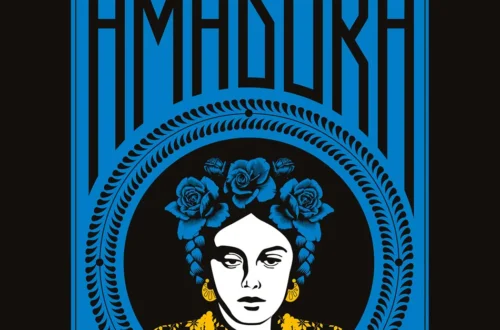
The word ‘intimate’ derives from the Latin intimus—‘most interior,’ that which is deepest and hidden from view. To belong to an inner circle is to be admitted to its interiority: to share in its warmth, its protections and its resources. Yet the logic of the inner circle is by definition exclusionary. Every enclosure produces an outside; every embrace implies the possibility of its refusal. It is this double movement, the drawing-in and shutting-out, that characterizes how we imagine family, kinship and other forms of community that lies at the heart of this essay collection, emerging from the Postcolonial Narrations conference on the topic of “Inner Circles,” held at St Hilda’s College, Oxford in September 2025. The collection includes Anna Dziuban’s “Thicker Than Water: Weaponised Kinship and Postcolonial Memory in Amadoka,” Arvian Hekseth’s “Extending the Maternal Circle: Creole Motherhood and the Unmaking of Britishness in Wonderful Adventures of Mrs Seacole in Many Lands (1857),” Irina Nakonechna’s “Unsettled Inheritance: Scottish Identity and Argentinian Literature, Post-1960,” and Mrunmayee Sathye’s “Lines that Refuse to Hold: Revisualising Metaphors of Margin and Centre.”
The essays gathered here approach the inner circle as both an affective and a spatial metaphor, one that condenses a set of questions central to postcolonial studies: who belongs, and on what terms? How are the boundaries of the family, the nation, a language or a culture drawn and policed and how can they be contested, transgressed or reimagined? Recent scholarship has increasingly challenged understandings of kinship as a fixed or exclusively biological relation, instead emphasising its capacity to produce alternative forms of belonging and care. Donna Haraway’s call to “make kin, not babies” (102) imagines kinship as an expansive and potentially emancipatory practice that exceeds reproduction, opening new possibilities for solidarities across established social and political boundaries. At the same time, such attempts to reclaim kinship cannot be separated from the colonial histories and how they have shaped the language of family, belonging and intimacy. Rather than treating kinship solely as a site of care and affiliation, postcolonial scholarship has long examined how colonialism organized the world around a structure of centre and periphery, with Europe constituting itself as an ‘inner circle’ from which its (former) colonial subjects were forever excluded. As Achille Mbembe writes in On the Postcolony the colonial potentate is often understood as “a family state”, in which a “family and filial bond binds the colonies to the mother country” (35). Colonialism thus operated through the rhetoric of the family and kinship, in presenting itself as the mother country, by extolling fraternal bonds and thereby insinuating a coercive intimacy, even as it disrupted and destroyed kinship networks. As scholars such as Ann Laura Stoler have argued, this contradiction reveals intimacy itself to be a technology of imperial rule rather than merely its sentimental language. The papers which follow take up the tension between these two dimensions of the inner circle: kinship as a site of belonging and care, on the one hand, and as an instrument of coercion, exclusion and symbolic violence, on the other.
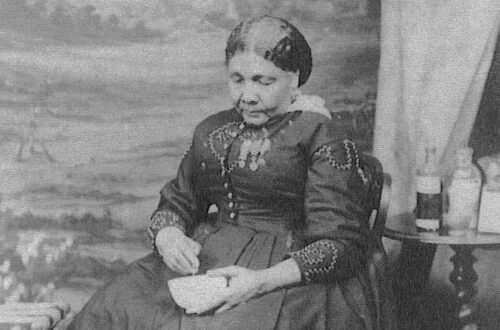
A first and perhaps most insistent theme connecting these essays is the malleability of kinship as a discursive category and its susceptibility to reappropriation. Familial language, as these contributions collectively demonstrate, is never politically neutral. It can encode hierarchies of race, gender, class and nationhood even as it appears to neutralize them within the warm grammar of home and belonging. The rhetoric of brotherhood, marriage and motherhood have all historically been used to obscure forms of political subjugation. This tension is most directly taken up by Anna Dziuban, whose reading of Sofia Andrukhovych’s Amadoka examines how kinship categories are mobilised through the fabrication of shared memory and language to legitimate imperial hierarchies. At the same time, the malleability of the discursive category of kinship means it can be (re-) appropriated and made to do perhaps unexpected critical work, a possibility explored by Arvian Hekseth, whose reading of Mary Seacole’s memoir counters Simon Gikandi’s argument that Seacole was ultimately captured by colonial discourse. Rather, Hekseth shows how Seacole strategically inhabits multiple social spheres simultaneously, using a familial rhetoric to expand and redraw the boundaries of ‘Britishness’ from within.
A second concern, closely related, is what it means to inhabit multiple and partially contradictory circles of belonging simultaneously. The subjects of these essays—whether creole memoirists, Ukrainian soldiers, Scottish Argentinian life-writers or second-generation British Pakistani graphic novelists—must negotiate multiple competing affiliations. They occupy bifocal subjectivities, navigating competing claims of ethnicity, nationality, language or culture, and the literary forms they produce are shaped by this multiplicity. Irina Nakonechna’s contribution traces how Scottish-Argentine writers grapple with an uneasy inheritance of a settler colonial past and Andrew Graham-Yooll’s attempt of a “self-(re)construction” in the face of this memory. Nakonechna engages with ideas of transgenerational memory and how literary projects may recover and critically evaluate these memories. Rather than claiming to have found (re)solutions, the texts examined tend to dwell in the discomfort of thresholds, where belonging is neither fully achieved nor fully refused.
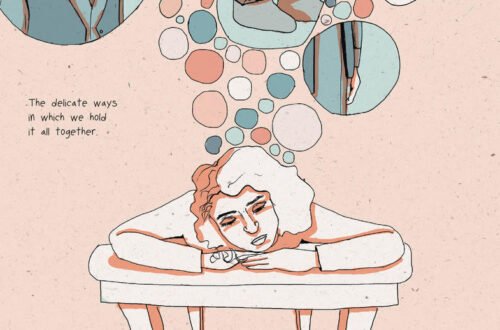
This leads to the third and final theme: which spatial and visual metaphors are adequate and useful to represent the complexities of postcolonial belongings? The binary logic of centre and periphery risks flattening out the complexities of multiple, overlapping forms of belonging and disbelonging. Mrunmayee Sathye’s contribution pushes this question further, proposing new spatial models through a reading of Sabba Khan’s graphic memoir The Roles We Play. By attending to the visual form of the text itself, Sathye finds in Khan’s depictions of diasporic life in London an argument for understanding inner and outer circles not as fixed and bounded spaces but as fluid, permeable and in constant motion. Overall, the essays in this collection experiment with alternative models that seek to capture the fluidity and multidirectionality of the subjectivities presented in these works, without dissolving the very real structures of power which continue to govern access to inner circles across the globe.
Taken together, these four essays refuse any simple account of what it means to belong, to be excluded from, to lay claim to or be claimed by an inner circle. What unites them is their shared insistence that the inner circle is never a given. It can be made and unmade, contested and reimagined. The works presented here are records of this ongoing labour.
Works cited
Haraway, Donna J. Staying with the Trouble: Making Kin in the Chthulucene. Duke University Press, 2016.
Mbembe, Achille. On the Postcolony. University of California Press, 2001.
About the author:
Maria Menzel studied English and American Studies (B.A.) at the University of Bamberg and Literary Studies (M.A.) at the University of Amsterdam. Since April 2024, she has been a doctoral candidate at the Research Training Group Family Matters at Ludwig Maximilian University in Munich. Her dissertation project examines Anglophone postcolonial family novels of the late 20th and early 21st centuries — including works by Salman Rushdie, Yaa Gyasi, Namwali Serpell, and Bernardine Evaristo. The project explores how these texts use the interweaving of fact and fiction to fill the gaps in collective memory created by diaspora and colonial history, and what forms of belonging beyond the nation state they imagine.
This post is a part of the Inner Circles series.
Other contributions to the series include:
“Lines that Refuse to Hold: Revisualising Metaphors of Margin and Centre” by Mrunmayee Sathye
“Thicker Than Water: Weaponised Kinship and Postcolonial Memory in Amadoka” by Anna Dziuban
“Extending the Family: Creole Motherhood and the Unmaking of Britishness in Wonderful Adventures of Mrs Seacole in Many Lands (1857)” by Arvian Hesketh