![[re]frame](https://reframe-academia.com/wp-content/uploads/2025/02/reframe-logo_neu4-1-scaled.png)
By Danica Stojanovic-Schaffrath
“There is nothing in the world more difficult to refuse than self-righteous goodwill.” (Yáng 247)
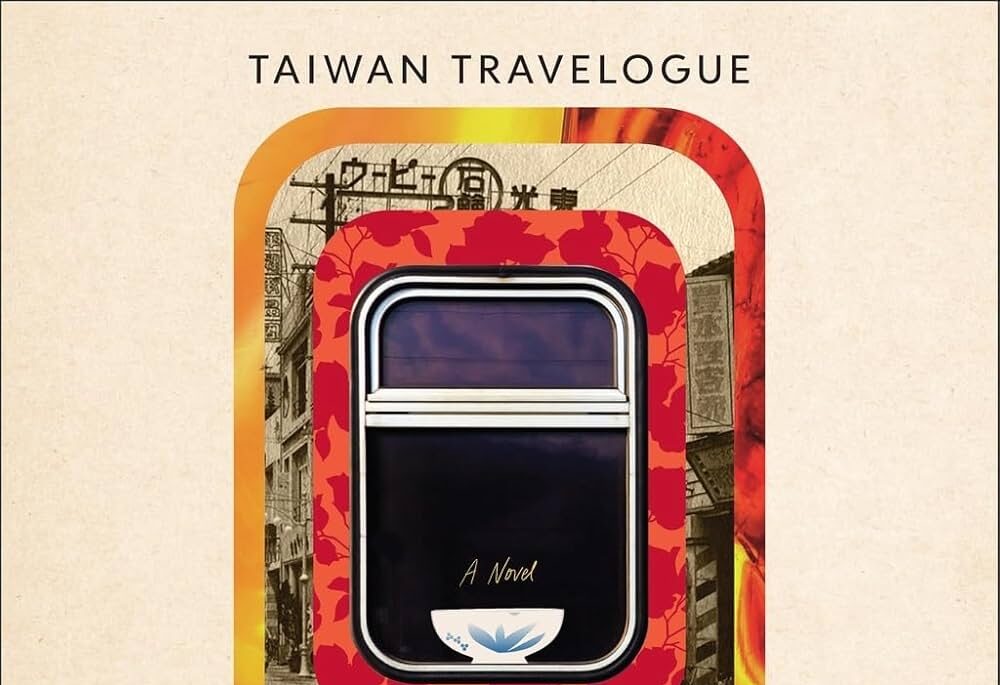
Yáng Shuāng-zǐ’s 2020 award-winning novel, Taiwan Travelogue is a historiographic metafictional examination of Japanese colonialism as situated within the prism of global imperial motions. The novel follows a fictitious Japanese author, Aoyama Chizuko, as she explores the Japan-governed Taiwan throughout 1938, acting as a culturally distinct way of writing back to colonial history. Its reflection on colonial power is shown both on the level of the story and its discourse, with the protagonists’ relationship mirroring power dynamics of the imperial force and its subjects, and the narrative techniques used to examine the pervasiveness of 20th century imperialism. The novel foregrounds instances of imperial benevolence through the prism of the two protagonists’ conflicted views on care and personal governance. In visiting and discussing Taiwanese landmarks, Chizuko and Chizuru act as a microcosm of the power negotiation between the two countries. As the narrative progresses, the sapphic homosocial undertones become the focal point of resistance to Japanese hegemony. In doing so, I argue that Taiwan Travelogue queers Japanese imperial history by exposing colonial power as simultaneously mimetic, heteronormative, and unstable.
Colonial ‘Benevolence’ and the Politics of Consumption
Taiwan Travelogue covers a span of one year at the time when Taiwan was under Japanese rule, having been annexed in 1895, showcasing, on the one hand, the bilateral cultural negotiation between the two countries, and on the other, the rhizomic nature of Western-inspired colonialism Japan tried to imitate. The story follows Aoyama Chizuko, a renowned author, who is invited to deliver a series of lectures in colonised Taiwan and write a travelogue listing her experiences. However, Chizuko does not wish to be a ‘tool’ of the Japanese government, as she herself reiterates multiple times. In order to step off the high imperial horse, Chizuko sets out to try local cuisine, visit famous landmarks, and immerse herself into what she deems ‘authentic’ Taiwanese culture. Chizuko hires a guide, a local woman, Wáng Chiēn-hò whom Chizuko prefers to call Chizuru (Ông Tshian-hóh in Taiwanese, or Ō Chizuru in Japanese), who takes her through various geographical, technological, and culinary landmarks. It soon becomes clear that the ‘authenticity’ Chizuko craves is, for the most part, her desire for the exotic as the protagonist attempts to reconcile her idea of Taiwan with Japanese imperial reality. Each chapter covers approximately one month of Chizuko’s stay during which she acquaints herself with Taiwanese history and her own unconscious biases and entitlement of the colonial force. While Chizuko refused to write her travelogue in a way that would glorify Japan’s presence and influence, she does not seem to be aware of how much of its ideologies she embodies and unwittingly reproduces.
As they travel along the island, Chizuko’s disregard for cutting-edge technology and (labour-camp-evocative actions to build) railways reveals her own biases. Unimpressed, in Chizuko’s case, does not mean she does not believe in the ‘beneficial’ impact of Japanese colonialism. She acknowledges its horrors, but celebrates the results: “It’s brutish, isn’t it, to transplant Mainland sakura and force them upon the Island’s soil…but the beautiful sakura are innocent of any crime” (Yáng 90). What Chizuko fails to see is that she is idealising Taiwanese cultural erasure. Planting sakura required changing the island’s terrain, importing soil, and forcing the local population out of their homes. Sakura trees then take precedence over local flora, superimposing Japanese culture on the island. Similarly, after the war-induced destruction of local temples, the Japanese government rebuilt, but did not leave them in their original form. “[W]hen Toyohara Shrine was completed a few years ago, the government added new Japanese stone lanterns, and they added a torii gate to Maso Temple as well” (Yáng 246, emphasis added)), transforming Taiwanese places of worship into Japanese-infused tourist attractions. Chizuko, however, barely even registers this, as she subsumes the islanders’ culture under the Japanese empire. For instance, Chizuko does not really acknowledge or appreciate Taiwan’s own cultural distinctivenes:
“Mishima-san, I heard that there’s a famous Maso temple on Toyohara Street that acts as a religious and cultural hub for the Islanders.”
“That is correct.”
“I heard that they sell a beverage made of pickled pineapple there.”
“Yes, that is true.”
“Can I have some of that today?” (Yáng 19)
Chizuko’s cultural colonialism here operates through the prism of food “within ideologies of consumption, including notions of trade, abstinence and luxury” (Morton 10). Chizuko sidelines the significance of cultural landmarks in favour of easily obtained gratification through food.
Chizuko’s descriptions of food are laden with comparative exclamations, usually with regards to how similar or different they are from Japanese food. These comparisons ostensibly act as an attempt at illustrating the exoticism of Taiwanese cuisine on familiar terms. However, even more so, they always draw on “classical Chinese poetry and philosophy” (Bo, 2024), at the time when large parts of China were under Japanese rule, tying her knowledge structures back to the Empire. Furthermore, despite her eagerness to capture the presumed authenticity of Taiwanese cuisine in her travelogue, Chizuko inadvertently emphasises Japanese cultural, economic, and political superiority. For instance, she ascribes specific value to different foods through her choice of vocabulary, indicating that Japanese cuisine is superior, but she would prefer to try other, less sophisticated, i.e., Taiwanese, dishes:
“And why bother traveling at all if one only plans on eating jōgashi?’ she asks, referring to the Japanese terms “jōgashi” (literally, “upper/superior snack”) and affordable “dagashi” (literally, “lower/trivial snack”) which, [the Yáng translator twins] helpfully point out, share a relationship ‘not unlike the dichotomy between upper and working classes.” (Bo, emphases added)
Her travelogue thus reproduces colonial ideology evocative of the ‘noble savage’ discourse of Western empire wrapped in ostensible nuance and sophistication, in this case in the form of haute cuisine. Chizuko’s travelogue also encapsulates the simplification and homogenisation of East Asian cultures under Japanese imperial rule. And while Japanese imperialism is not commonly associated with bondage and genocide, the extent of its cultural impact is underscored by frequent references to Chinese philosophy (adopted by Japan), food comparisons, infrastructural impositions of the Japanese style (from railroads to school hierarchies). Chizuko also embodies – to her mind – good intentions laden with unconscious bias, as she questions her guide about the importance of places where Japan had intervened. In doing so, she acts as a vehicle of imperial righteousness disguised as benefaction which does not recognise the cultural destruction in its wake.
Such practices of benevolence are not confined to geographical and cultural sites of interest – they seep into the interpersonal level between the two, where Chizuko’s imperial logic is filtered through the language of care and protection. Chizuko’s well-intentioned bumbling extends beyond simple cultural comparisons. This is particularly noticeable in her attempts to impose her will on Chizuru by repeatedly questioning the latter’s decision to accept an arranged marriage:
“[You] know that I don’t want you to marry that fellow.”
“Why do you not want me to marry?”
“The better question is, why do you accept this fate? You have things that you want to pursue — things that have nothing to do with marrying a man. If that bastard only wants a wife in order to have children, then he should find a woman whose only goal is to marry.”
“Are you angry?”
“No, I’m not. But isn’t it your dream to be a translator? I don’t plan on marrying either, you know. My goal is to spend my whole life writing. In that case, wouldn’t it be perfect for you and me to go back to Kyūshū together? Your family will agree if I propose it to them directly, won’t they? (Yáng 165, emphases added)
Chizuko’s insistence here carries more than feminist undertones about not getting married. She, from the position of superiority both as Chizuru’s boss and the Japanese coloniser, assumes she knows what is best for Chizuru. Her brand of liberal thought fails to consider what not marrying might mean for Chizuru – from ostracism and being denounced by her family to the inability to find work, rent a flat, or have a bank account, which would ultimately make Chizuru her dependant, replicating the geopolitical subordination in their relationship. What seems to be feminist solidarity at first glance turns out to be another iteration of imperial governance: Chizuko’s proposal thus mirrors Japan’s colonial rhetoric of benevolent modernisation, translating geopolitical domination into interpersonal terms.
Their intimate relationship can be expanded to the broader macrocosm of global colonial practices. Chizuko arguably attempts to liberate Chizuru under the auspices of her own imperial biases, forming a multi-faceted embodiment of colonialism: on the one hand, she is, unbeknownst to her, influenced by the Japanese imperial ideologies, and on the other, convinced their governance is injurious. Japanese imperialism, too, lies at the nub of a wider imperial network. Its ties to Western colonialism are implied through formal devices of the novel. When it was first published, Taiwan Travelogue used a series of deliberately confusing and contradictory afterwords and notes to frame its story. It was presented as an alleged memoir of the Japanese author Aoyama Chizuko based on her one-year stay in Taiwan in 1938, which had gone out of print. The manuscript was then, again allegedly, discovered by Aoyama’s daughter, translated into Mandarin by Chizuru’s own daughter, after which it was translated into Mandarin-Chinese by Yáng Shuang-zi and her twin sister (Shuang-zi also meaning twins in Mandarin Chinese). Confusing? For a reason. Although the discovery that Yáng was the original author had caused something of a stir in China due to its obfuscation, this style is highly evocative of European early modern writing. In that, it unveils what Watson calls “Japanese imperial mimicry” (174). The found manuscript convention was highly popular among women writers in early modern Europe, specifically England (and subsequently Great Britain) during its colonial expansion. While women writers often used this technique to distance themselves from any implicating criticisms in their texts – and a degree of this can be seen in Yáng’s narrative – the spatial-historical connection intuits Japanese imitation of Western, and again, British colonial exploits. Where one Empire ends, then, another begins, forming a self-legitimising circuit of oppression and cultural imposition whose persisting legacies permeate the world to this day.
Inspired by the West, yet afraid of its influence, Japan strove to protect Far East Asia from Western colonisation while acting as a coloniser itself. Kublin notes that the inception of Japanese imperialism after the conclusion of the Sino-Japanese War with the Treaty of Shimonoseki was largely inspired by the well-established patterns of Western colonialism to the point where Japan strove to become “the Great Britain of the East” (Kublin 75-76). Its annexation of Taiwan was one of the very first steps towards this goal. The Anglo-Japanese Alliance of 1902 bolstered Japan’s imperial position, modernised and industrialised the country, and gave rise to its ‘pan-Asian’ philosophy which sought to unite (and unify) Asian countries, both geographically and culturally. Taiwan Travelogue underscores the latter in Chizuko and Chizuru’s exchanges, but it also signals the global interconnectedness of colonial ideology through its form. Its deliberate blurring of authorial lines – from the fictitious Aoyama Chizuko to Chizuru’s alleged daughter – the narrative underscores the multidirectional course of Japanese colonialism. However, Taiwan Travelogue emphasises the reverse course of influence too in the way it, even though it was written by a Taiwanese author, appropriates the Japanese voice in its protagonist. This way, Yáng indicates that the history of Japanese imperialism was not simply the result of solely Japanese influence. On the contrary, the two cultures merged in some ways, but diverged and clashed in others, and the narrative and formal recognition of this clash opens a position from which colonial history can be examined.
Queer Intimacy and the Destabilisation of Empire
Where consumption and epistemological dominance served as a way of establishing Japanese cultural hegemony in terms of tangible governance via ‘Japanising’ landscapes, landmarks and infrastructure, the intimate relationship between the two women becomes a site of de-centring colonial logic. The public and private colonisation clash in the interactions between the two protagonists, which carry queer undertones. In her seminal Sexuality of History, Susan Lanser argues that in early modern Europe “the sapphic became a flash-point for epistemic upheavals that threatened to dismantle the order of things” (2). Lanser suggests that the sapphic offers a defamiliarizing, distracting, or distancing displacement from more pressing material challenges of state craft and slavery, colonialism and class. (Lanser, Sexuality of History 4)
She argues that the very notion of modernity and modernisation hinges on intimate relationships between women, which are used to define social structures and borders of ‘appropriate’ desire. She proceeds to note that the existence of sapphic relationships in particular threatened to exclude men from the sexual economy, posing a threat to the patriarchal system, which resulted in stringent reactions. I extend her argument here a bit further – geographically and historically – to the early 20th century Japan and Taiwan. The relationship between the two bears both colonising and decolonising efforts, which belie Japan’s impact on Taiwan. Chizuko attempts to empower Chizuru while imposing her own will on her companion, whereas Chizuru actively resists Chizuko’s cultural and emotional overtures. I read their sapphic friendship as a prism through which Japanese imperial history is reassessed.
More than unchecked colonial ideology, Chizuko’s appeal against Chizuru’s marriage is laden with queer undertones which serve as the only site of negotiation of power on equal terms. As such, their relationship indicates that only non-heteronormative reading of colonisation allows for the full emancipation of Taiwan. While Chizuru tends to evade Chizuko’s question with her own brand of strategic compliance on matters of food, culture, and infrastructure, in this respect she resists the latter’s well-intentioned advances both verbally, by scolding Chizuko and bristling at her, and emotionally, by reinforcing the distance between the two. The latter, in particular, hurts Chizuko and she often tries to remedy the rift in their relationship, becoming, herself, the subject of someone else’s will. Furthermore, Chizuru is not a passive follower of orders in their relationship – unlike in her translator and guide duties.
Chi-chan reached her hand toward my face and brushed the corner of my mouth with a finger.
“You’ve got a bit of miso.”
She then casually licked away the sauce on her finger — as though it were nothing, nothing at all.
Hot blood rushed from my neck to the crown of my head. I blushed deeply. (Yáng 171)
The homoerotic implication of this moment further emphasises Chizuko’s loss of power as she is the one left blushing and blundering through the rest of their conversation. Only then is she fully able to appreciate the complexity of her companion, whose reticence she had mainly pegged for capriciousness rather than a complex inner world Chizuko had so far not tried to understand. She, reflecting on her previous actions, wonders whether Chizuru is mad because Chizuko had forced her to wear a kimono or eat sashimi, and therefore acts in a seductive and – for Chizuko – confusing way. Chizuko’s colonial power, though not exhibited through conquest of land but rather cultural impositions masked as goodwill, is then finally challenged. Chizuru’s resistance offers an anti-hegemonic reading of colonial power, not simply by implying homosociality, but indicating the heteronormativity of the colonial order. Chizuko’s bumbling and subsequent shift in her interactions with Chizuru present a counterforce to colonialism at large. From that point on, the translator also assumes more agency, arranging a visit to the Kirun railroad landmark because “[she] wished to see the landmark” and because “it’s not a bridge. It’s more like — history” (Yáng 188). The roles thus reversed signal a broader assertion of decolonial power. Once the guide no longer enables imperial curiosity and asserts her own cultural agency and precedence, she becomes a symbol of Taiwanese postcolonial recovery. Chizuru thus shifts focus from imperial consumption to historical recognition, reframing the terms of decolonisation.
Chizuko and Chizuro’s relationship continues the logic of control disguised as benevolence – shrine renovations, culinary interventions, and agricultural beautification – until the queer perspective interrupts it. Taiwan Travelogue underscores this by using the queer lens as a method, which does not simply revolve around a queer relationship in the text. To come back to Lanser briefly, history as hetero- and chrononormative tends to present itself as monolithic. Queering the colony in the novel, then, allows for a re-assessment of the legacy of Japanese imperialism in Taiwan. In doing so, the queer lens speaks back to the monolithic narratives about Taiwan. The lack of classical – and soothing – resolution of the conflict between Chizuko and Chizuru upsets the narrative fixation: history, and especially the history of colonialism, remains open and unresolved, much like its legacies. As a result, queering the colony, underscores the importance of recognising the multidirectional, hybrid, and decolonial potential of cultural exchange, particularly through relationships that challenge the very structures of power that sustain colonialism. In doing so, Taiwan Travelogue reads colonial history against its linearity, and epistemic hierarchies, opening thus a space for decolonial possibilities.
Works Cited
Bo, Lauren Yu-Ting. “‘A Monster’s Appetite’: Food, culture and authenticity in Yáng Shuāng-zĭ’s Taiwan Travelogue.” Words Without Borders, 5 Dec. 2024, https://wordswithoutborders.org/book-reviews/a-monsters-appetite-food-culture-and-authenticity-in-yang-shuang-zis-taiwan-travelogue-lin-king-lauren-yu-ting-bo/.
Freeman, Elizabeth. Time Binds. Queer Temporalities, Queer Histories. Duke University Press, 2010.
Kublin, Hyman. “The evolution of Japanese colonialism.” Comparative Studies in Society and History, vol. 2, no. 1, 1959, pp. 67–84, JSTOR, https://www.jstor.org/stable/177547.
Lanser, Susan S. “Of closed doors and open hatches: Heteronormative plots in eighteenth-century women’s studies.” The Eighteenth Century, vol. 53, no. 3, 2012, pp. 273–290, JSTOR, https://www.jstor.org/stable/23365013.
Lanser, Susan S. The Sexuality of History. Modernity and the Sapphic, 1565–1830. University of Chicago Press, 2014.
Morton, Timothy. The Poetics of Spice. Romantic Consumerism and the Exotic. Cambridge University Press, 2000.
Watson, Jini Kim. “Imperial Mimicry, Modernisation Theory and the Contradictions of Postcolonial South Korea.” Postcolonial Studies, vol. 10, no. 2., pp. 171–190, 2007, https://www.tandfonline.com/doi/full/10.1080/13688790701348565#d1e123. Yáng, Shuāng-zǐ. Taiwan Travelogue. Translated by Lin King. Macmillan, 2024.
About the Author:
Danica Stojanovic-Schaffrath is a postdoctoral researcher at the University of Graz. Her primary research interests include early modern women’s fiction, staging contemporary fantasy, and postcolonial theory. Her guilty pleasures lie within the sphere of East Asian literatures and theatre, popular culture, and intermedial forms of communicating rage.